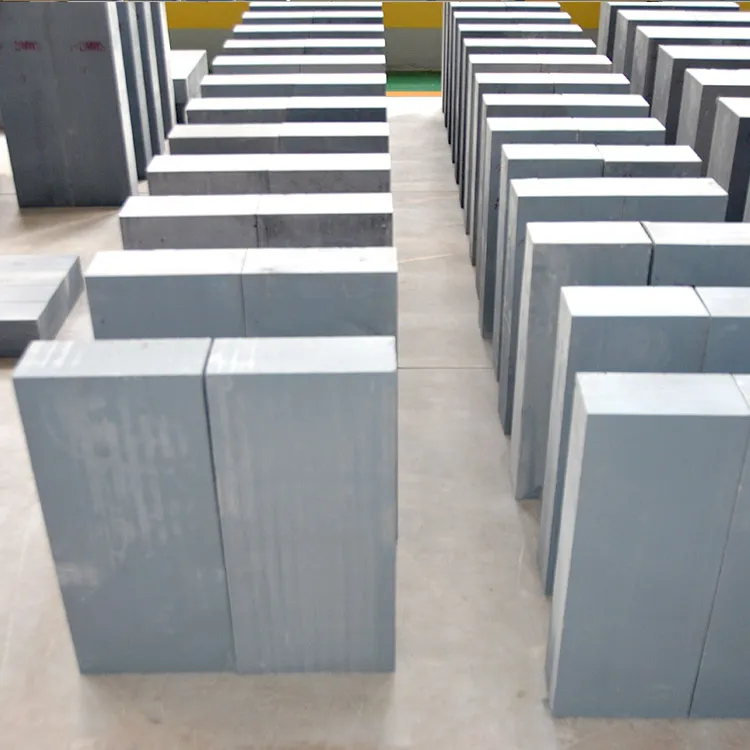
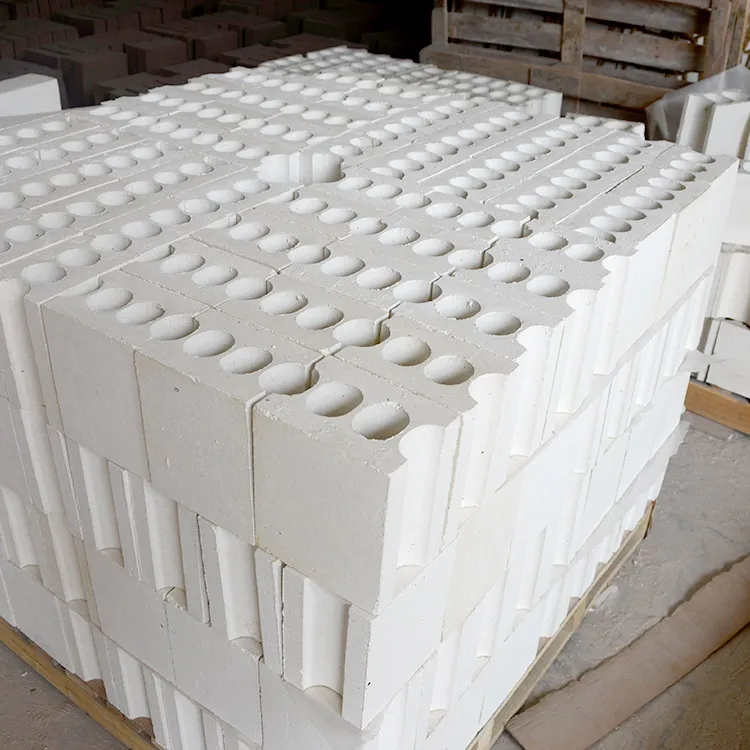
Taphole Runway Castable: Refractory material used to line the channel through which molten iron flows from the blast furnace to the ladle, withstanding temperatures exceeding 1500°C.
Thermal Shock Resistance: A material's ability to withstand rapid temperature changes without cracking, measured by the number of cycles it can endure before failure (typically 10-50 cycles in industry standards).
Slag Resistance: The capacity to resist chemical attack from molten slag, quantified by weight loss percentage after immersion tests (industry benchmark: <5% weight loss after 5-hour test).
Blast furnace taphole runways face one of the most extreme environments in metallurgical operations—sustained temperatures of 1450-1550°C, mechanical erosion from flowing molten iron, chemical attack from slags, and thermal cycling that tests material integrity. According to industry data, approximately 30% of unplanned blast furnace downtime can be attributed to taphole runway failures, resulting in production losses averaging $150,000-300,000 per hour depending on furnace capacity.
Selecting the optimal castable material isn't merely a maintenance decision—it directly impacts production continuity, safety margins, and overall operational efficiency. In this technical analysis, we'll examine how Sunrise engineers approach material selection based on specific smelting processes, ensuring our clients achieve extended service life (typically 30-60% longer than industry average) and reduced maintenance costs.
Successful material selection requires balancing four critical performance parameters, each playing a distinct role in operational longevity:
Measured by cold crushing strength (CCS) and hot modulus of rupture (HMOR), this parameter ensures the material maintains structural integrity under thermal load. For standard operations, CCS should exceed 80 MPa at room temperature and HMOR should remain above 10 MPa at 1400°C.
Compositional compatibility with slag chemistry is critical. Acidic slags require alumina-silica compositions, while basic slags demand higher magnesia content. Advanced formulations incorporate zirconia or silicon carbide to create a protective barrier against slag penetration.
ASTM C1171 testing shows that materials capable of withstanding 25+ thermal cycles (1100°C to room temperature) significantly reduce cracking incidents. Microstructural design featuring controlled porosity helps absorb thermal expansion stresses.
Workability directly impacts installation quality and downtime. Optimal flow values (180-220mm as per GB/T 24763) ensure proper compaction without excessive water addition, which can compromise final strength.

Different smelting processes impose unique demands on taphole runway materials. Understanding these variations is key to avoiding costly selection mistakes.
| Process Type | Key Challenges | Optimal Material Characteristics | Service Life Expectancy |
|---|---|---|---|
| Basic Oxygen Furnace (BOF) Steelmaking | High slag basicity, frequent temperature fluctuations | High alumina (70-85%) with spinel additives, enhanced thermal shock resistance | 45-60 heats per repair |
| Hot Metal Pretreatment | Aggressive desulfurization agents, high mechanical wear | Silicon carbide reinforced, high density (>3.0 g/cm³) | 30-45 heats per repair |
| Continuous Casting | Prolonged exposure to molten metal, thermal fatigue | Low cement, ultra-low porosity formulations | 60-90 heats per repair |
Have you experienced premature failure of taphole runway materials despite following standard selection guidelines? Often, the issue lies in mismatched material composition with specific process conditions rather than product quality. A leading Chinese steel mill recently reduced maintenance costs by 42% after re-evaluating their material selection criteria with Sunrise technical specialists, shifting to a tailored alumina-spinel formulation that better matched their high-sulfur ore processing requirements.
Effective material selection requires a systematic approach that integrates laboratory testing, process analysis, and operational experience. The following decision framework guides engineers through critical evaluation steps:
Common pitfalls to avoid include over-specifying materials (unnecessarily increasing costs) or selecting based solely on initial price rather than total lifecycle cost. A European steel producer recently discovered that paying 15% more for a premium castable resulted in 67% lower overall costs due to extended service life and reduced downtime.
Selecting the right taphole runway castable requires balancing technical requirements with operational constraints. With over 15 years of experience supplying refractories to major steel producers worldwide, Sunrise offers comprehensive material solutions backed by technical expertise and on-site support.
Download our exclusive "Blast Furnace Taphole Runway Castable Selection Guide" to access:
As blast furnace operations face increasing pressure to improve efficiency and reduce environmental impact, material selection becomes even more critical. The right taphole runway castable doesn't just prevent failures—it contributes to optimized throughput, energy efficiency, and operational safety. By aligning material properties with specific process requirements, engineers can achieve sustainable performance improvements that positively impact the bottom line.
Technical advancements continue to push performance boundaries, with new formulations incorporating nanotechnology and advanced ceramic phases showing promising results in laboratory testing. Staying informed about these developments while maintaining a clear understanding of your specific operational conditions will ensure you make the most effective material selection decisions for your blast furnace.