
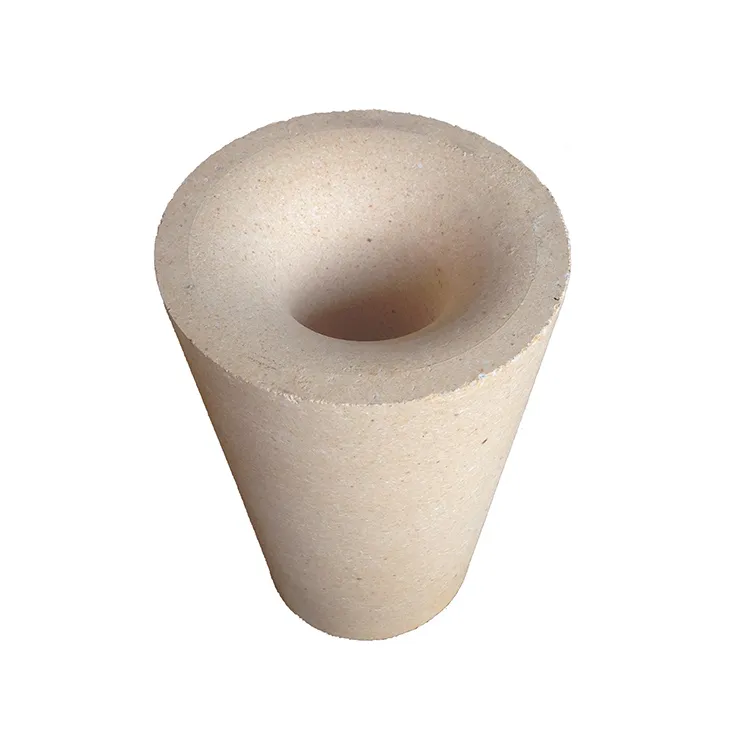
In the ever-demanding steel production industry, dry quenching systems demand refractory bricks that withstand intense thermal shocks. High-alumina mullite refractory bricks serve as the backbone in these environments, providing critical thermal stability. This guide dives into the evaluation of their thermal shock resistance, focusing on crack propagation and spalling behaviors under extreme temperature variations, delivering practical insights to engineers and plant managers.
Thermal shock resistance measures a refractory brick’s ability to withstand rapid thermal gradients without cracking or spalling. Crucial parameters include crack initiation threshold, crack propagation rate, and spalled area percentage under repeated temperature cycling. Industry-standard testing, such as the ΔT=850°C water quench test, simulates these conditions. Data suggests that high-alumina mullite bricks maintain integrity through over 50 rapid quench cycles before critical spalling emerges.
While laboratory tests provide controlled baseline data, real-life operational conditions expose refractory bricks to complex stressors beyond temperature gradients, such as mechanical loads and corrosive atmospheres. Overlaying field data such as longitudinal crack extension rates—typically ranging between 0.1-0.3 mm per 100 thermal cycles—and spalling surface growth facilitates a comprehensive performance evaluation.
A common misinterpretation arises when load softening temperature is conflated with thermal shock resistance; although related, they measure distinct phenomena. Load softening temperature indicates structural weakening under load at elevated temperatures, whereas thermal shock resistance denotes dynamic response to rapid temperature changes.
Effective maintenance hinges on early identification of thermal shock damage. Engineers frequently deploy infrared thermal imaging to detect microcracks invisible to the naked eye by identifying anomalous heat patterns. Early signs include patchy heat dispersal and localized hot spots, which anticipate crack expansion.
Veteran engineers recommend integrating routine thermal imaging inspection cycles with periodic ultrasonic testing for deeper crack mapping. This proactive strategy shifts maintenance paradigms from reactive repairs to condition-based interventions, ultimately reducing downtime and extending refractory lifespan by an estimated 20-30%.
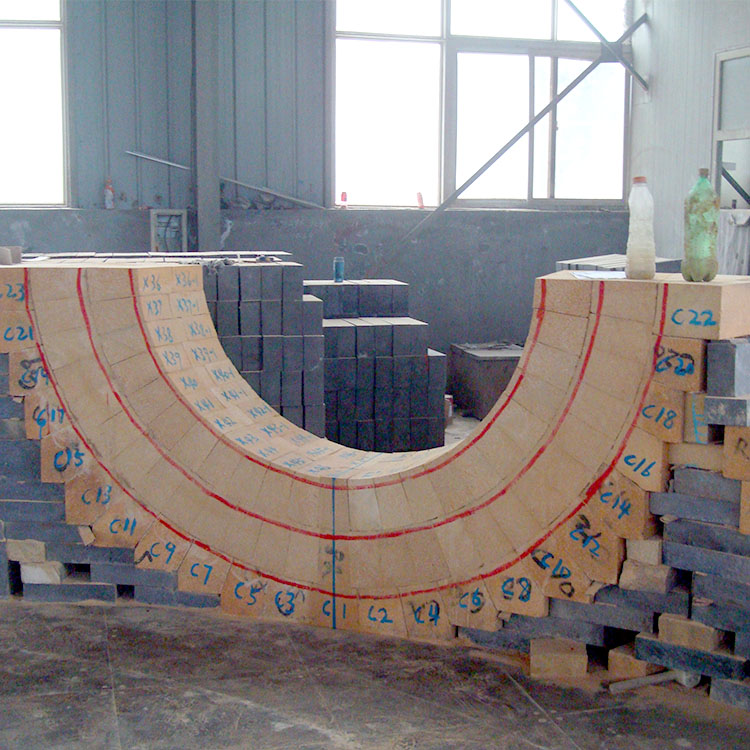
A leading steel plant reported significant refractory brick failures attributed initially to thermal shock. However, data review revealed that premature spalling was exacerbated by overlooking cumulative crack growth and misreading load softening data. After retraining engineers on precise diagnostic criteria and implementing infrared surveillance, the plant realized a 15% reduction in refractory replacement costs and improved kiln uptime.
This illustrates the criticality of combining rigorous lab protocols with field intelligence to understand refractory behaviors realistically.







 <#else>


