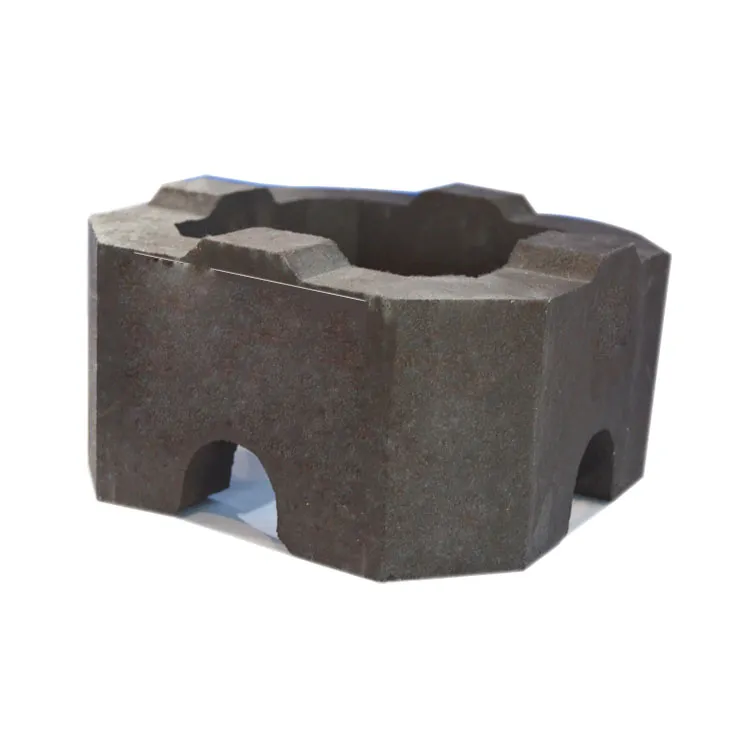
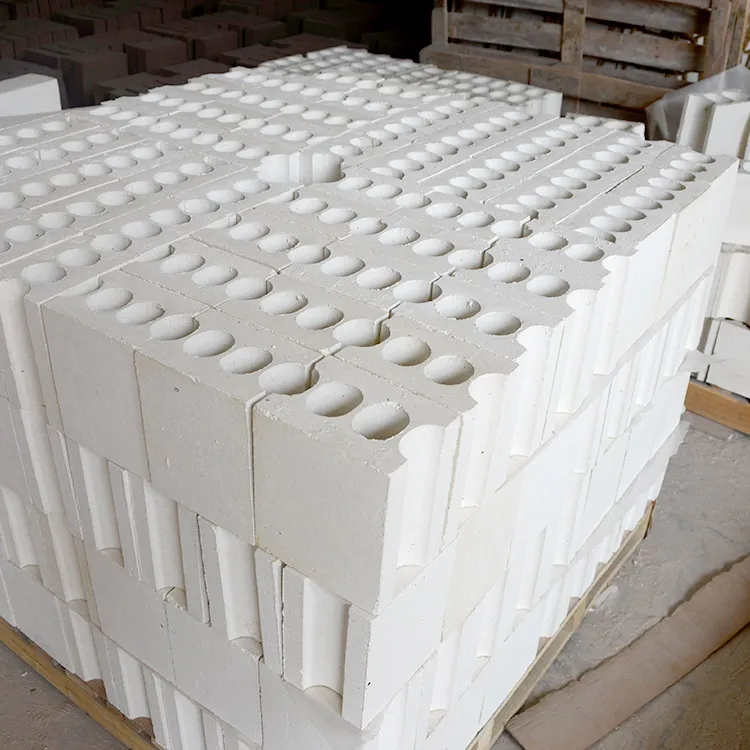
As a professional refractory manufacturer with extensive experience serving global glass enterprises, Zhengzhou Sunrise Refractory Co., Ltd. understands that scientific material selection directly impacts kiln service life, production efficiency, and product quality. This guide systematically explains the matching logic between key refractory materials and glass kiln components, providing practical reference for glass industry professionals in engineering, procurement, and technical roles.
The selection of refractory materials for glass kilns requires comprehensive consideration of multiple factors to ensure optimal performance in specific operating environments:
| Kiln Component | Recommended Materials | Performance Priorities | Selection Logic |
|---|---|---|---|
| Melting Pool Bottom | Fused Cast AZS 33#, 36# | Corrosion resistance, volume stability | Direct contact with glass melt requires high resistance to alkaline corrosion and minimal contamination |
| Melting Pool Sidewalls | Fused Cast AZS 36#, 41# | Corrosion resistance, thermal shock resistance | Subjected to high temperature, chemical attack, and thermal cycling; higher AZS content for critical areas |
| Regenerators | Mullite bricks, High-alumina bricks | Thermal shock resistance, structural strength | Alternating heating and cooling requires excellent thermal shock resistance and load-bearing capacity |
| Throat & Doghouse | Corundum bricks, Zircon bricks | Abrasion resistance, corrosion resistance | High velocity glass flow and batch material impact require superior wear resistance |
| Superstructure | Silica bricks, Low porosity fireclay bricks | High temperature strength, dimensional stability | Sustained high temperature requires good load-bearing capacity and creep resistance |
Zhengzhou Sunrise Refractory's AZS brick series (33#, 36#, 41#) offers graduated zirconia content to match different corrosion conditions. The 33# grade provides economic performance for general melting areas, while 41# delivers maximum corrosion resistance for critical zones like throat and sidewall upper parts. These materials excel in environments with high alkali content and require minimal glass contamination.
Our mullite bricks provide an optimal balance of thermal shock resistance and structural strength, making them ideal for regenerator checkerwork and other areas subject to rapid temperature changes. Their low thermal conductivity also contributes to energy efficiency, an increasingly important consideration in modern glass production.
For specialized applications, Zhengzhou Sunrise Refractory offers tailored solutions including zircon bricks for areas requiring high zirconia content without the cost of AZS, alumina hollow bricks for thermal insulation, and low porosity fireclay bricks for superstructure components where cost-effectiveness and reliability are paramount.
When developing a refractory selection strategy for your glass kiln, consider this systematic approach:
"The right refractory selection balances technical performance with practical considerations. At Zhengzhou Sunrise Refractory, we combine material expertise with deep glass industry knowledge to help customers achieve optimal kiln performance and cost efficiency."
Zhengzhou Sunrise Refractory Co., Ltd. has supported glass manufacturers across Southern Europe, Northern Europe, Central America, Southeast Asia, and the Middle East with tailored refractory solutions. Our technical team is available to provide personalized material selection guidance based on your specific kiln design, operating parameters, and production goals.