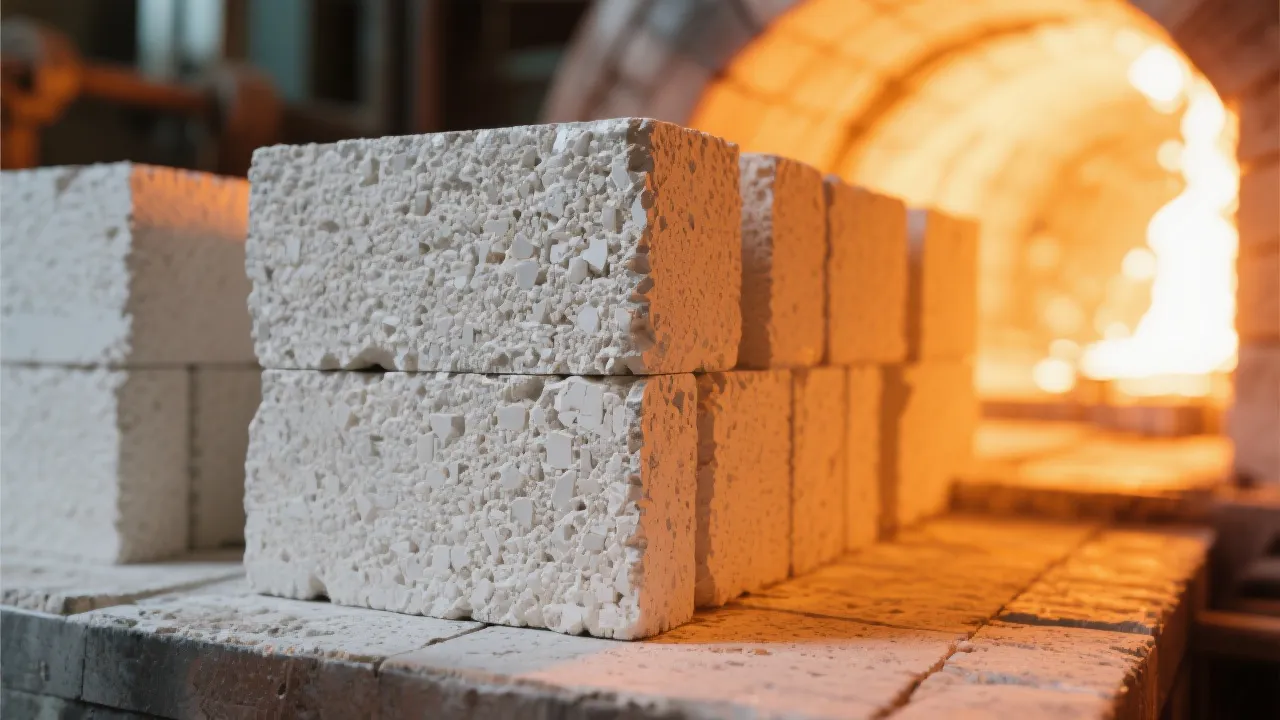
Thermal shock failure remains one of the top causes of unplanned downtime in steelmaking operations—especially in dry quenching systems where high-alumina mullite refractories face extreme temperature swings. According to a 2023 study by the International Refractories Association, up to 42% of unexpected furnace shutdowns in integrated steel plants are directly linked to premature refractory degradation due to poor thermal shock resistance.
A major Chinese steel mill experienced repeated lining failures in its dry quenching chamber after just 6 months of operation. Initial inspections revealed severe spalling on the inner walls—over 30% surface area lost within 1,200 thermal cycles. Upon analysis, it was found that the original brick formulation had an alumina-to-mullite ratio of 70:30, which proved inadequate under rapid heating-cooling conditions (ΔT > 500°C per cycle).
After switching to a modified composition with 65% mullite and 35% corundum, along with optimized sintering at 1,650°C for 12 hours, the same system showed zero spalling after 2,500 cycles—a 108% improvement in service life. This real-world example highlights how precise material design can dramatically extend refractory performance.
| Factor | Impact on Thermal Shock Resistance | Recommended Range |
|---|---|---|
| Mullite-to-Corundum Ratio | Higher mullite improves crack resistance; too much reduces strength | 60–70% |
| Average Pore Size | Smaller pores absorb stress better; larger ones increase risk | 0.5–2 μm |
| Sintering Temperature | Too low = weak bonding; too high = grain growth & brittleness | 1,600–1,700°C |
Microstructural analysis using SEM imaging confirmed that bricks with uniform pore distribution and strong intergranular bonds exhibited significantly less microcracking during thermal cycling. In contrast, bricks with irregular porosity or weak crystal interfaces failed rapidly—even when chemical composition was identical.
For global steel producers facing rising energy costs and tighter maintenance windows, optimizing refractory choice isn't just about cost—it's about operational continuity. Every hour of unplanned downtime can cost between $15,000–$50,000 depending on plant scale and output rate.
Our technical team has compiled over 30 case studies from Asia, Europe, and North America showing consistent improvements when applying these principles—not only in dry quenching but also in blast furnaces, ladles, and reheating chambers.
Have you faced similar challenges with refractory failure in dry quenching systems? What worked—or didn’t—in your facility? We’d love to hear your story and add it to our growing knowledge base. Your insights could help another engineer avoid costly mistakes.
👉 Ready to optimize your refractory strategy? Get Our Free Thermal Shock Performance Guide + Sample Formulation Report




 <#else>