

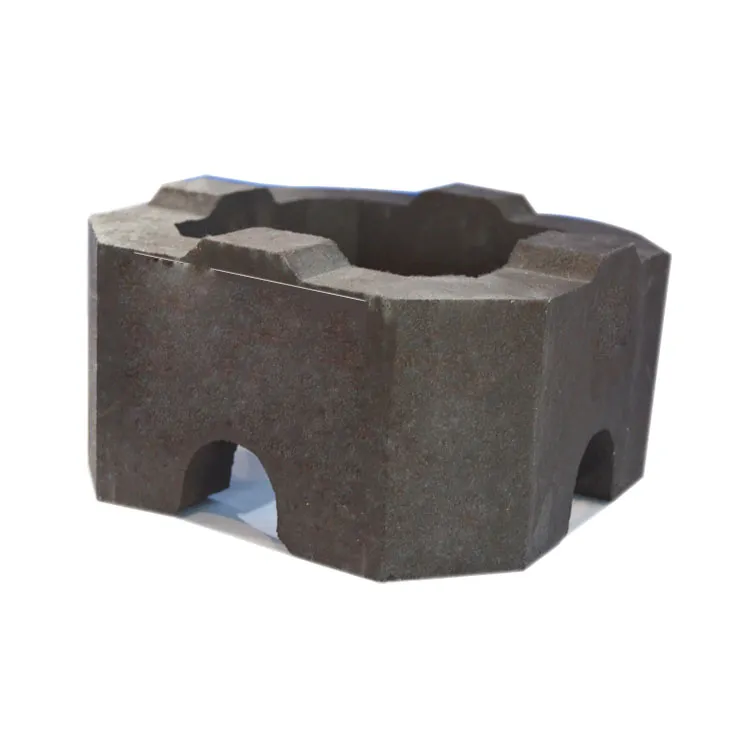
In high-temperature industrial applications—from steelmaking to cement kilns—material reliability isn’t just a preference; it’s a non-negotiable requirement. Among the most critical components is fire clay brick, especially when its Al₂O₃ (alumina) content remains stable at 35–45%, as this range delivers optimal balance between thermal shock resistance and mechanical durability.
Research from the International Ceramic Society shows that bricks with consistent Al₂O₃ levels above 38% reduce wear rate by up to 40% compared to those below 30%. This isn't merely about hardness—it's about how well the material resists abrasion under extreme conditions like continuous slag exposure or turbulent gas flow.
Moreover, these bricks exhibit a weak acidic nature (pH ~6.5), which minimizes unwanted reactions with basic refractory linings such as magnesia-carbon bricks. A study conducted in a Chinese steel plant found that using Al₂O₃-stabilized bricks reduced chemical degradation of adjacent materials by 32%, extending overall furnace lining life by an average of 18 months.
For exporters aiming for global markets, compliance isn’t optional—it’s your ticket to credibility. Our bricks meet:
These certifications ensure consistency across production batches, enabling seamless integration into OEM specifications worldwide—especially in EU, North America, and GCC regions where regulatory scrutiny is stringent.
| Application | Avg. Lining Life Increase | Cost Savings per Year |
|---|---|---|
| Steel Ladle | +15% | $12k–$25k |
| Cement Kiln | +22% | $18k–$35k |
| Glass Furnace | +19% | $15k–$30k |
These aren’t hypothetical gains—they’re documented outcomes from clients in Germany, Saudi Arabia, and Brazil who switched to our certified Al₂O₃-stable bricks. Reduced downtime, fewer replacements, and safer operations are now part of their daily KPIs.
Want to see how our high-alumina fire clay bricks can improve your furnace efficiency and safety?
Get Technical Data Sheets & Free Consultation



 <#else>


