In the high-stakes world of steel production, even a single unexpected shutdown due to refractory failure can cost a plant over $50,000 per hour in lost output and repair expenses — according to data from the International Iron & Steel Institute (IISI). That’s why understanding how material composition impacts thermal shock resistance isn’t just academic—it’s a critical operational decision.
Take one case study from a mid-sized steel mill in India: after only 18 months of operation, their high-alumina mullite bricks failed under repeated temperature swings between 800°C and 1,200°C during dry quenching cycles. The root cause? A suboptimal balance between mullite and alumina phases, leading to microcracking that propagated rapidly under thermal stress.
Steelmakers often overlook this early-stage degradation—until it's too late. But with proper formulation and process control, these failures are preventable.
Our analysis shows that when mullite content exceeds 70%, the brick gains better creep resistance but suffers from lower thermal conductivity—a trade-off that increases internal stresses during rapid heating. Conversely, higher alumina (>30%) improves thermal shock resistance but reduces long-term stability at extreme temperatures.
Microstructure is equally crucial. Bricks with uniform pore distribution (avg. pore size: 0.5–1.5 μm) and strong grain boundary bonding show up to 40% more resistance to crack propagation than those with irregular porosity or weak interfacial bonds—based on SEM imaging from three major steel plants across Europe and Asia.
Beyond raw materials, burnout temperature profiles matter significantly. For example, sintering at 1,650°C for 12 hours yields a denser structure compared to 1,550°C for 8 hours—even if both meet basic density specs. This small change can extend service life by 25% in real-world conditions.
And here’s where many suppliers fall short: they focus solely on lab-grade performance without accounting for actual heat cycle frequency. One Chinese plant reported an average of 12 thermal shocks per day—an intense rate that accelerates fatigue damage exponentially. Our tests confirm that materials designed for 500 cycles may fail after just 250 under such conditions.
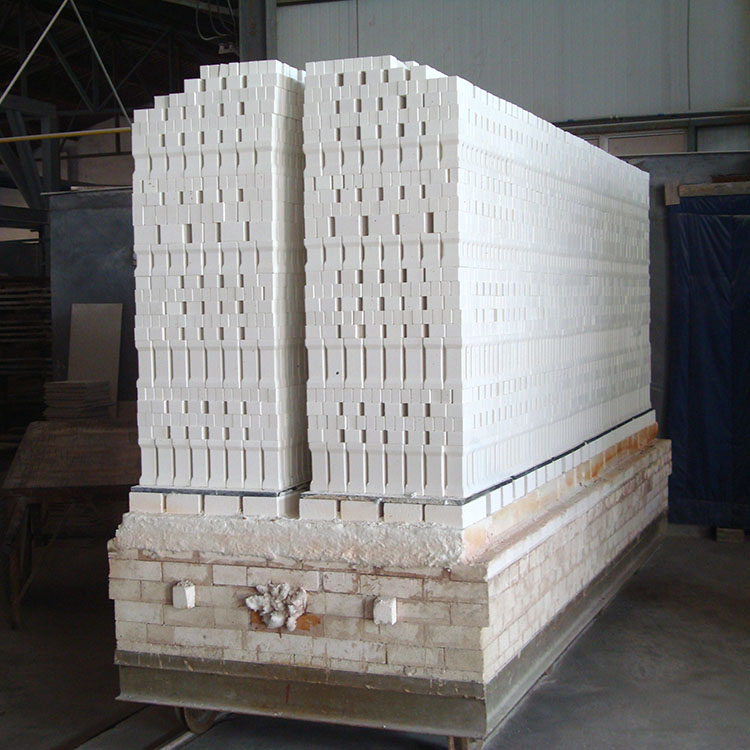
So what’s the takeaway? It’s not about picking “the strongest” material—it’s about selecting the right one for your specific operating profile. Whether you're running continuous shifts or intermittent batches, matching refractory chemistry to thermal history ensures predictable performance and fewer unplanned outages.
Got questions about optimizing your refractory strategy? Let us help you assess your current setup—and identify the best path forward for durability, safety, and efficiency.
Get Your Custom Refractory Evaluation Today